ZACHARY SHEWBART
Technical Designer | Game Designer
Unity 2d
FLING
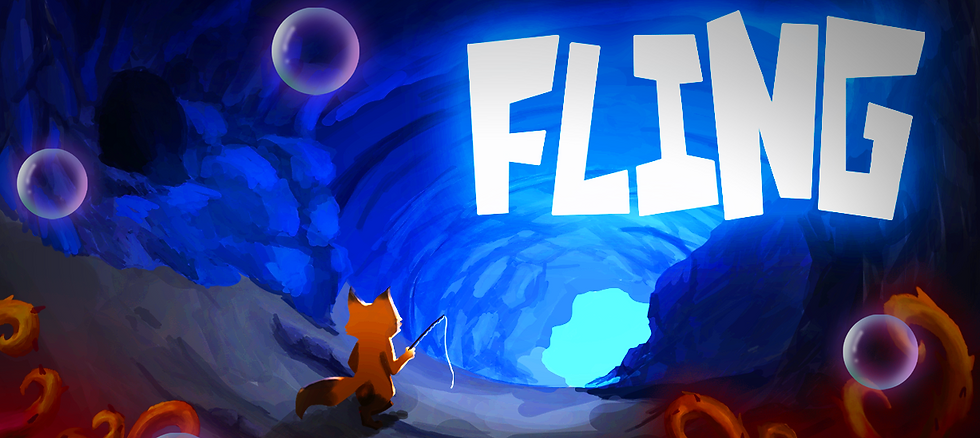
FLING is a precision based 2D platformer where you use a magical fishing rod as a grappling hook to fling through a mystical cave, interact with bubbles and creatures, avoid deadly vines, and climb toward escape through skillful and deliberate movement.
Design Focus: Level Design, Game Design
Engine: Unity 2D
Development: 3 months
what i accomplished
my Role
Technical Designer

Game Design
-
Designed gameplay systems that reinforced speed-based traversal.
-
Balanced challenge and player onboarding through tutorialization and encounter sequencing.
-
Worked closely with programmers and artists to refine mechanics and level flow.

Level Design
-
Designed multiple levels across a 15-level campaign.
-
Created platforming challenges that progressively introduced and expanded the grappling mechanics.
-
Iterated layouts through playtesting to improve pacing, readability, and difficulty progression.
Design


Teach Through Play
Introduce mechanics naturally through level layouts before combining them into more complex challenges.
Reward Player Mastery
Design levels that encourage players to build speed, maintain momentum, and discover efficient routes using the grappling hook.
Rapid Development
Develop gameplay and level designs through frequent playtesting, quickly refining mechanics, layouts, and difficulty based on player feedback to create a polished experience.
Agile Spiral
Build the game through an iterative spiral development process, delivering incremental improvements each sprint while continuously testing, evaluating, and expanding the core grappling gameplay.
Successes
-
Successfully narrowed the project's scope early, allowing the team to polish the core grappling mechanic and deliver a complete, shippable experience.
-
Completed level design ahead of schedule, enabling multiple playtesting and iteration passes that improved pacing, readability, and player onboarding.
-
Established a collaborative workflow between designers and programmers that made gameplay systems easy to balance and refine throughout development.
Challenges
-
Early communication and decision-making slowed production, particularly around establishing a unified artistic vision and development priorities.
-
Initial over-scoping required significant feature cuts, while later conservative scoping resulted in a shorter and more accessible experience than originally intended.
-
Team coordination occasionally lacked clear ownership and feedback pipelines, leading to delays in reviewing completed work and maintaining visual consistency.
Key Takeaways
-
Establish clear communication channels, ownership, and creative direction as early as possible to improve team efficiency.
-
Scope projects around a polished core experience while leaving room for iterative content additions instead of aggressively minimizing scope.
-
Continuous playtesting is most effective when feedback comes from the intended target audience, ensuring design decisions align with the desired player experience.